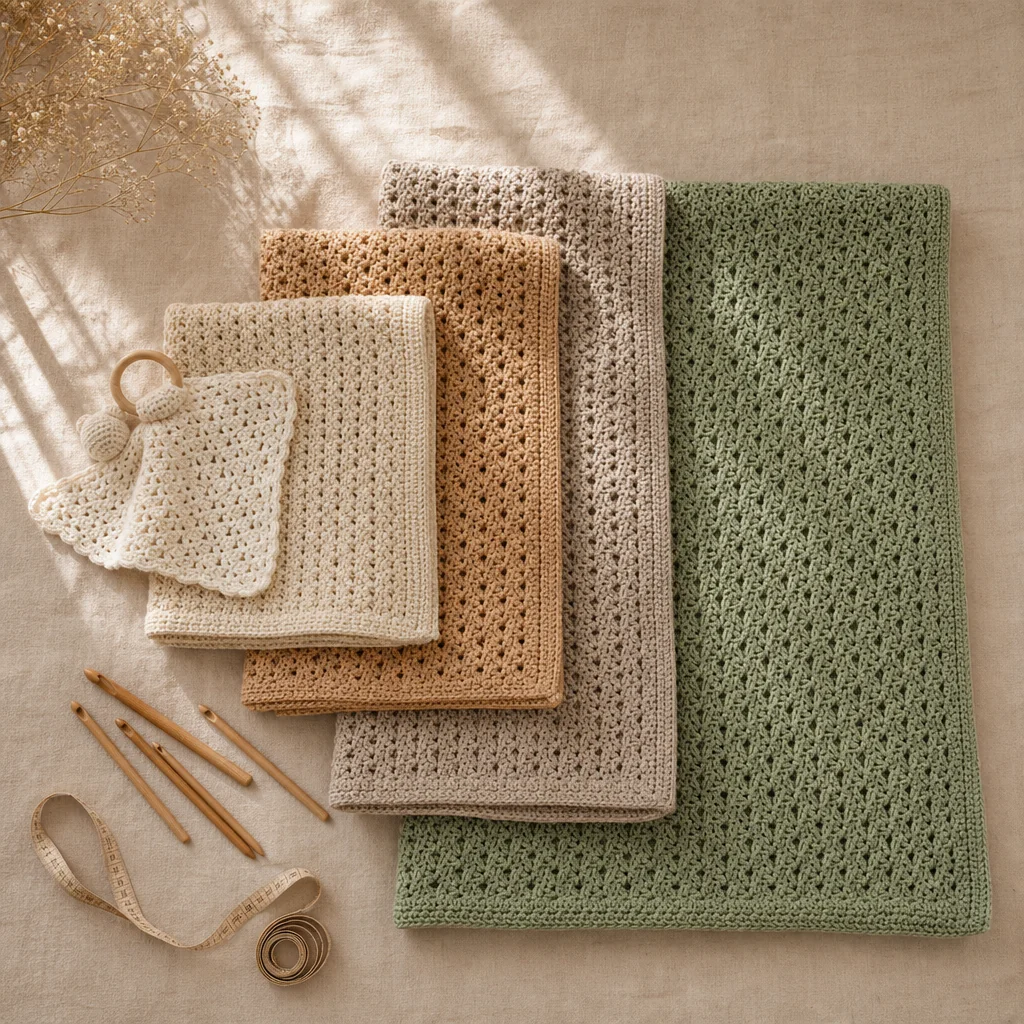
Standard Crochet Blanket Sizes: A Complete Guide from Baby to King
by Crochets Studio — A self-taught crochet designer and yarn enthusiast with over a decade of blanket projects ranging from loveys to bed throws, passionate about helping makers plan projects that actually fit their lives.
Standard crochet blanket sizes range from 30×30 cm for baby loveys to 230×260 cm for king-size throws—but these are starting points, not rules. Your yarn weight, stitch pattern, and personal preferences should guide your final dimensions. A gauge swatch is your best tool for predicting exactly how your finished blanket will turn out.
Why Blanket Size Matters Before You Begin
Starting a crochet blanket without a size goal is like taking a road trip without a destination. You might enjoy the journey, but you'll waste gas wondering where you're headed. The same goes for blankets. Without knowing your target dimensions, you risk running out of yarn halfway through, or ending up with something too small for the couch and too big for a lap throw.
More importantly, planning your size upfront lets you choose the right yarn weight and hook size to match your vision. A chunky merino throw needs fewer rows than a delicate fingering-weight blanket to feel substantial and drape beautifully. That's where knowing standard sizes—and understanding how to adapt them—becomes invaluable.
Standard Crochet Blanket Dimensions
Here are the most commonly used blanket sizes in the crochet community. Think of these as proven starting points, not strict rules:
Baby Lovey
30 × 30 cm (12 × 12 inches)
Perfect for tiny hands and small spaces. Baby loveys are ideal for car seats, strollers, or as a sentimental keepsake. They're quick to make and forgiving—a great project for practicing new stitches or testing colour combinations without committing to a full-size blanket. Most loveys use worsted-weight yarn and take just a few hours to complete.
Standard Baby Blanket
90 × 110 cm (36 × 43 inches)
The most popular size for newborn gifts. This dimension works well for swaddling, draping over a crib rail, or spreading on a play mat. It's large enough to feel like a real blanket but small enough to finish in a reasonable timeframe. Many beginner-to-intermediate patterns are designed around this size.
Toddler or Crib Blanket
100 × 130 cm (40 × 52 inches)
A step up from a baby blanket, perfect for toddlers or as a bed throw for a small crib. This size suits growing children and offers more coverage without the project feeling endless. It's still manageable for someone newer to larger projects.
Throw Blanket
130 × 180 cm (50 × 70 inches)
The workhorse of blanket sizes. A throw drapes beautifully over the back of a couch, across an armchair, or over your lap while reading. This is the size most crocheters default to when no specific dimensions are requested. Throws work equally well in chunky yarn (for quick projects) or fingering-weight (for detailed stitch patterns).
Twin Bed Blanket
170 × 230 cm (68 × 90 inches)
For actual bed coverage. A twin blanket is large enough to tuck under a mattress at the foot of the bed or drape across a twin-size mattress. This size requires commitment—expect a project that takes several weeks to several months depending on your yarn choice and pattern complexity.
Queen Bed Blanket
230 × 230 cm (90 × 90 inches)
A square format designed for queen-size beds. This is where projects become substantial endeavours, often taking two to four months to complete. The square shape is classic and forgiving if you lose track of row count. Many popular crochet blankets—like the classic granny square blanket—are sized as queens.
King Bed Blanket
230 × 260 cm (90 × 102 inches)
The largest commonly made crochet blanket. King-size blankets require serious yarn quantities and serious time investment. They're labour-of-love projects, often given as heirloom gifts or kept as personal treasures. Expect to use several kilograms of yarn and plan for months of work.
How Yarn Weight Changes Everything
Here's where the real nuance comes in: these dimensions are guidelines based on medium (worsted) weight yarn and moderate stitch density. Change your yarn weight, and everything shifts.
Chunky and bulky yarns create denser, heavier blankets with fewer stitches needed to reach the same dimensions. A throw blanket in bulky yarn might take just 15–20 hours of work. The same throw in fingering-weight yarn could take 40–60 hours. Both end up the same size, but they feel completely different—one cosy and weighted, the other light and lacy.
Lightweight and fingering-weight yarns create more delicate blankets that require more rows and columns to reach standard sizes. A baby blanket in cotton lace might look barely-there until you hold it; then you realize it's substantial and breathable. Perfect for summer, less ideal if you want a cosy winter blanket.
The drape factor also matters. Bamboo yarn drapes differently than acrylic. Merino has more softness than cotton. A stitch pattern like V-stitch creates different drape than half-double crochet. Two blankets of identical dimensions can feel and look completely different based on these variables.
Measuring Before You Start: The Gauge Swatch Method
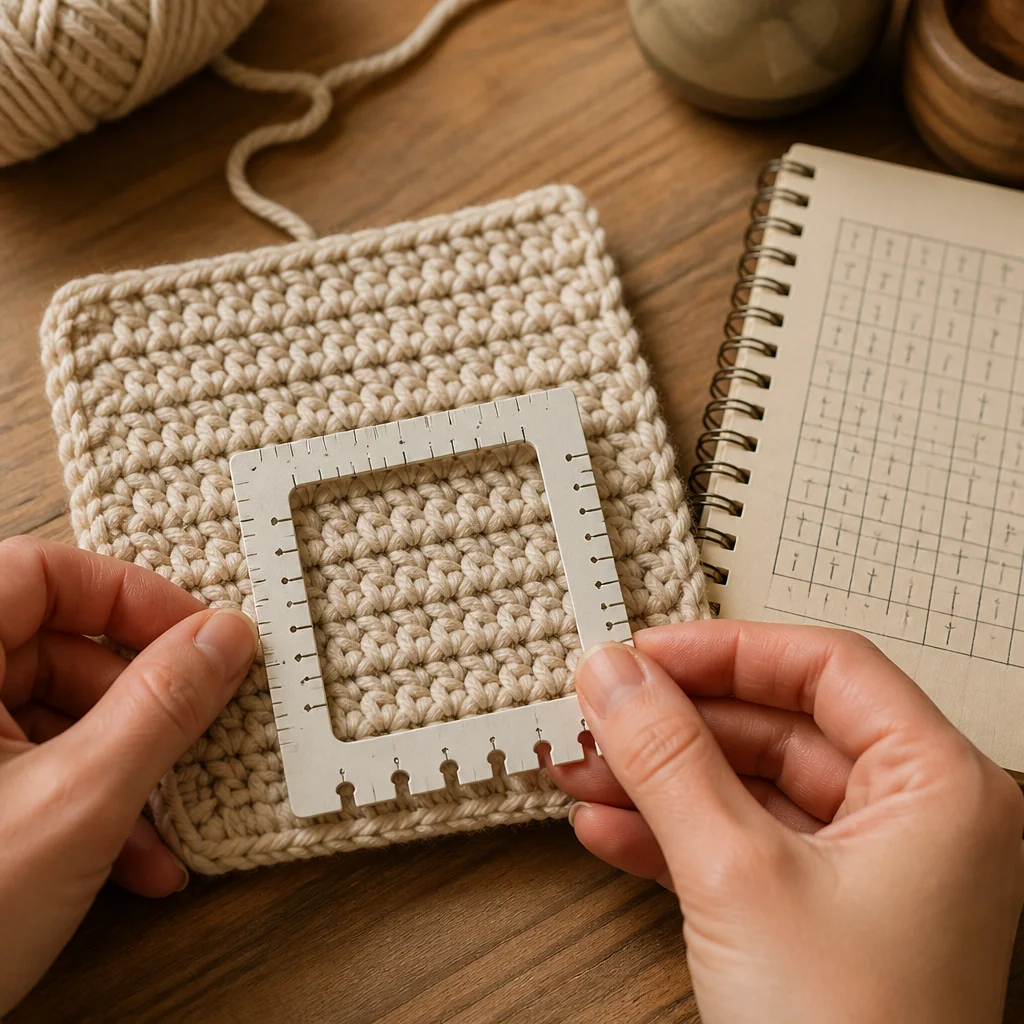
This is non-negotiable if you want predictable results. A gauge swatch is a small practice square—typically 10 × 10 cm (4 × 4 inches)—made with your planned yarn and hook, using your chosen stitch pattern.
Here's why it matters: if your gauge is off by even one stitch per 10 cm, a 230 cm blanket ends up being 23 cm different than planned. That's the difference between a queen-size blanket that actually fits your queen bed and one that barely covers a twin.
To swatch and calculate:
- Crochet your 10 × 10 cm swatch in your pattern stitch
- Count the number of stitches across and rows down
- Multiply those numbers by your target blanket width and height
- If the math doesn't match your stitch pattern repeat, adjust your hook size and try again
A slightly larger hook creates fewer stitches per centimetre (making the blanket larger with the same stitch count). A smaller hook creates more density (making the blanket smaller). This is how you calibrate your project to the exact dimensions you want.
Personal Preference: When to Break the Rules
These standard sizes exist because they work for most situations. But crochet is deeply personal. If you prefer your throw blankets wider and shorter, make them that way. If you want a baby blanket that's square instead of rectangular, go for it. If you need a blanket for your specific couch, measure it and design around those dimensions.
The "rules" are really just solutions that worked for hundreds of crocheters before you. Use them as a foundation, not a prison. The best blanket is the one you actually finish and love.
Creating Your Own Reference Chart
Print this size guide or create a simple chart with these dimensions and keep it near your hook basket. As you make more blankets, add your own notes: "This throw pattern at this gauge took 2,000 yards" or "Baby blankets in fingering weight need 1,500 yards for good coverage."
Over time, you'll develop an intuition for how much yarn you need and how long a project will take. Until then, having a reference chart prevents second-guessing and keeps you confident in your planning.
The Bigger Picture: Size and Intention
Every blanket should match its purpose. A lovey is meant to be small and portable. A bed blanket should actually cover a bed. A throw should drape without dragging on the floor. Think about how the blanket will be used, who will use it, and where it will live. Then choose your dimensions accordingly.
Don't be afraid to customize. If a pattern calls for a 130 × 180 cm throw but you know you want something slightly smaller, scale it down. If you're making a crib blanket and realize mid-project that you want it a bit larger, adjust your row count. Crochet is flexible—literally and figuratively.
Next step
Use Our Gauge Calculator