How to Crochet a Gauge Swatch (and Not Skip This Step)
by Crochets Studio — Written by a Crochets.ca contributor who has ripped out more than one sweater for skipping this exact step, and now swatches religiously.
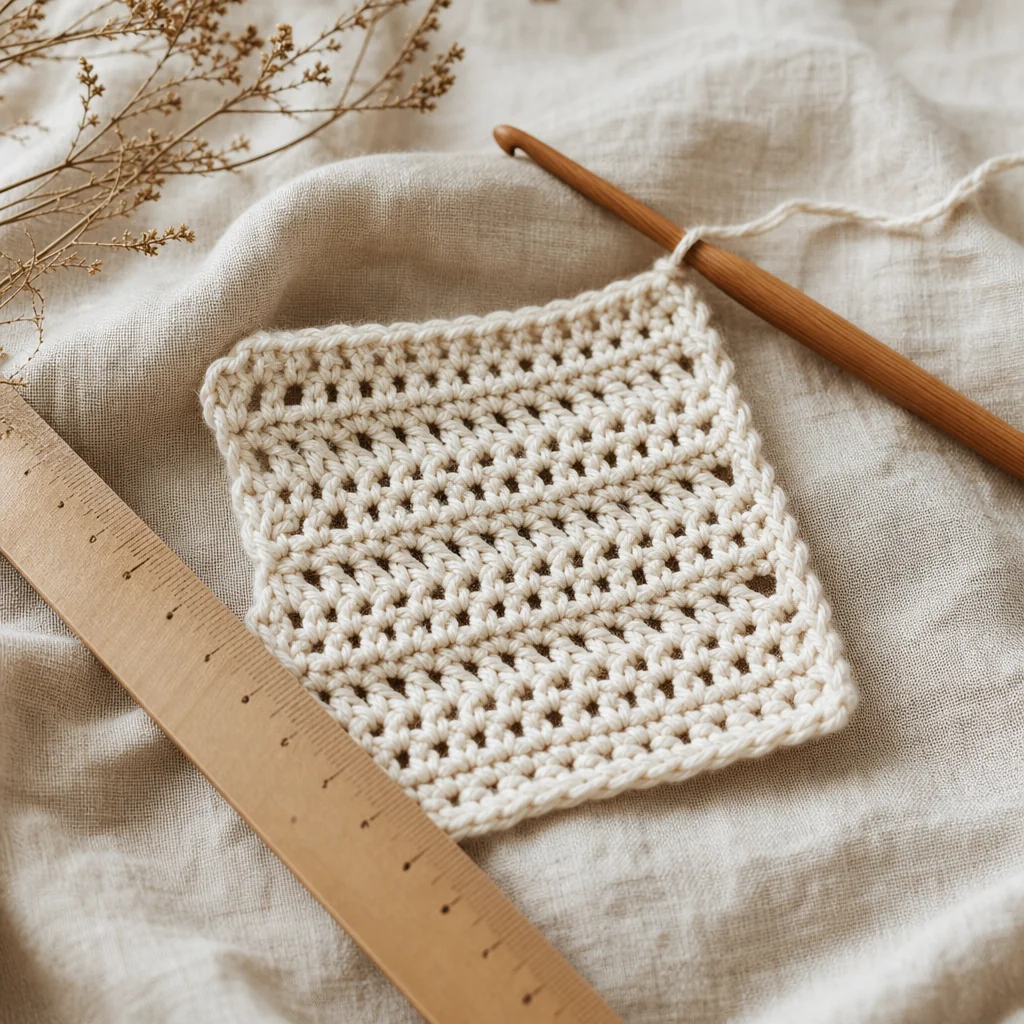
A gauge swatch is a small test piece, roughly 12-15 cm square, that shows whether your stitches match the size a pattern expects before you commit to the real project. Making one properly means casting on extra stitches, working past the curling edges, blocking it the way you'll treat the finished piece, then measuring the middle 10 cm. Skipping it is the single most common reason handmade garments and blankets come out the wrong size.
Why Bother With a Gauge Swatch
A gauge swatch is a small test piece, usually 12-15 cm square, that you crochet before starting a project to check that your stitches match the size the pattern expects. Skipping it is tempting because it feels like busywork standing between you and the actual project, but it's the fastest way to avoid a sweater that swims on you or a hat that pinches your ears. Five minutes with a hook and some scrap yarn now saves an afternoon of frogging later.
Gauge isn't about doing something wrong. Everyone crochets with slightly different tension, and even the same person crochets tighter or looser depending on mood, yarn, or hook material. A gauge swatch simply tells you where you land compared to the pattern designer, so you can adjust before you're fifteen rows into a garment.
What You'll Need
- The exact yarn you plan to use for the project (not a substitute, since fiber content and thickness change gauge)
- The hook size listed in the pattern
- A ruler or a dedicated gauge tool with a 10 cm window
- Scissors and a yarn needle for weaving in ends
- Scrap yarn or stitch markers to flag your measuring section (optional)
- Blocking supplies: pins, a blocking mat or towel, and a spray bottle or steamer depending on your fiber
How to Crochet a Gauge Swatch
Step 1: Cast On More Than You Think You Need
Chain enough stitches to make a swatch at least 12-15 cm wide, bigger than the 10 cm you'll actually measure. Use the hook size and stitch pattern the pattern calls for, not your favorite substitute hook. The extra width matters because edge stitches are never a fair sample. They get pulled, twisted, and handled more than the stitches in the middle, so you want clean, stable columns to count once the swatch is done.
Step 2: Work Past the Curling Edges
Keep crocheting in the stitch pattern until your swatch is roughly square, a little taller than 10 cm. This gives you a buffer of rows above and below the section you'll measure. Edge rows tend to curl or flare, especially in single crochet or with slippery yarns, so a stable middle section is what actually reflects your real tension.
Step 3: Fasten Off and Let It Rest
Fasten off and weave in your ends neatly, the same way you would on the finished piece. Let the swatch sit for a few minutes before handling it further. Crocheted fabric relaxes slightly after it comes off the hook, and measuring it the instant you finish the last stitch can give you a falsely tight reading.
Block It Before You Measure
Why Blocking Changes the Numbers
This step gets skipped constantly, and it's the one that causes the most surprises. Blocking, meaning wetting or steaming your swatch and letting it dry flat, can change your stitch count more than most people expect, especially with natural fibers like wool or cotton. Fibers relax, stitches even out, and the whole fabric can grow or settle into a slightly different shape than it had straight off the hook.
If you measure an unblocked swatch and then block your finished project, you're comparing two different fabrics. The whole point of swatching is to predict how the real thing will behave, so the swatch has to go through the same treatment.
How to Block a Swatch
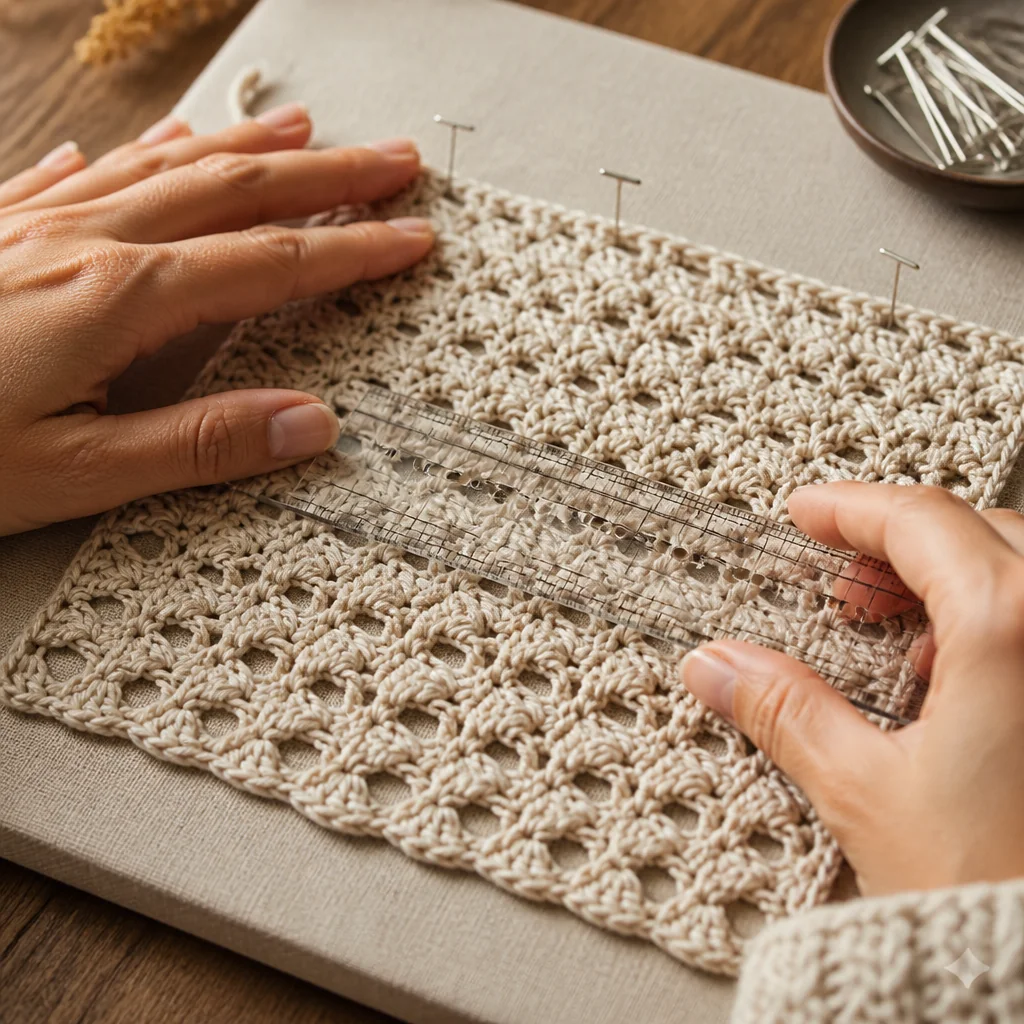
Treat your swatch exactly the way you plan to treat the finished project. If you'll wet block a sweater, wet block the swatch: submerge it in room temperature water, squeeze out the excess without wringing, and lay it flat on a towel or blocking mat, pinned gently to shape if needed. If you'll steam block, hover a steamer over the swatch without pressing it directly, then let it dry undisturbed. If the pattern calls for no blocking at all, measure the swatch as is. Let it dry completely before you move to the next step. A damp swatch will give you inaccurate numbers.
Count and Compare
Reading Stitches and Rows
Lay the dry, blocked swatch flat on a hard surface. Place a ruler or gauge tool across the middle of the fabric, away from the curled or uneven edges, and count how many stitches fit within 10 cm. Do the same for rows, counting vertically. Half stitches count, so don't round up or down out of convenience.
What the Numbers Are Telling You
Compare your counts to the gauge listed in the pattern. If you have more stitches than called for in 10 cm, your fabric is tighter than the designer's, which usually means your finished piece will come out smaller than intended. If you have fewer stitches, your fabric is looser, and your piece will likely come out bigger. Rows matter too, especially for anything worked in specific row counts, like amigurumi pieces or fitted garment sections.
Common Gauge Problems
Too Many Stitches: Your Fabric Is Tight
If your count is high, you're crocheting tighter than the pattern expects. Size up your hook by half a millimeter and make a new swatch. Don't just tell yourself to "relax your tension" while crocheting the actual project, since tension under pressure is hard to control consistently. A bigger hook is a more reliable fix.
Too Few Stitches: Your Fabric Is Loose
If your count is low, your stitches are looser than the pattern's gauge. Size down your hook by half a millimeter and swatch again. This is common with slippery yarns like bamboo or silk blends, which can slide more than cotton or wool.
Stitches Match But Rows Don't
Sometimes your stitch count lines up but your row count is off, or the reverse. This usually points to a difference in how tall your stitches are rather than how wide, which can come from how you insert your hook or how tightly you pull up loops. If only rows are off and the project isn't row-count sensitive, you can often adjust by adding or removing a row or two rather than resizing your hook entirely. If it is row-count sensitive, like a fitted amigurumi piece, prioritize matching rows and expect to compromise slightly on stitch width, or try a different yarn weight.
Make Swatching Part of Your Routine
A gauge swatch feels like a delay when you're excited to start a new project, but it's the cheapest insurance in the whole process. It costs a few minutes and a bit of scrap yarn, compared to hours of ripping back a finished piece that doesn't fit. Once you get into the habit, swatching, blocking, and measuring becomes automatic, and you'll start trusting your finished projects to come out the size you actually planned.
Next step
Try our gauge calculator