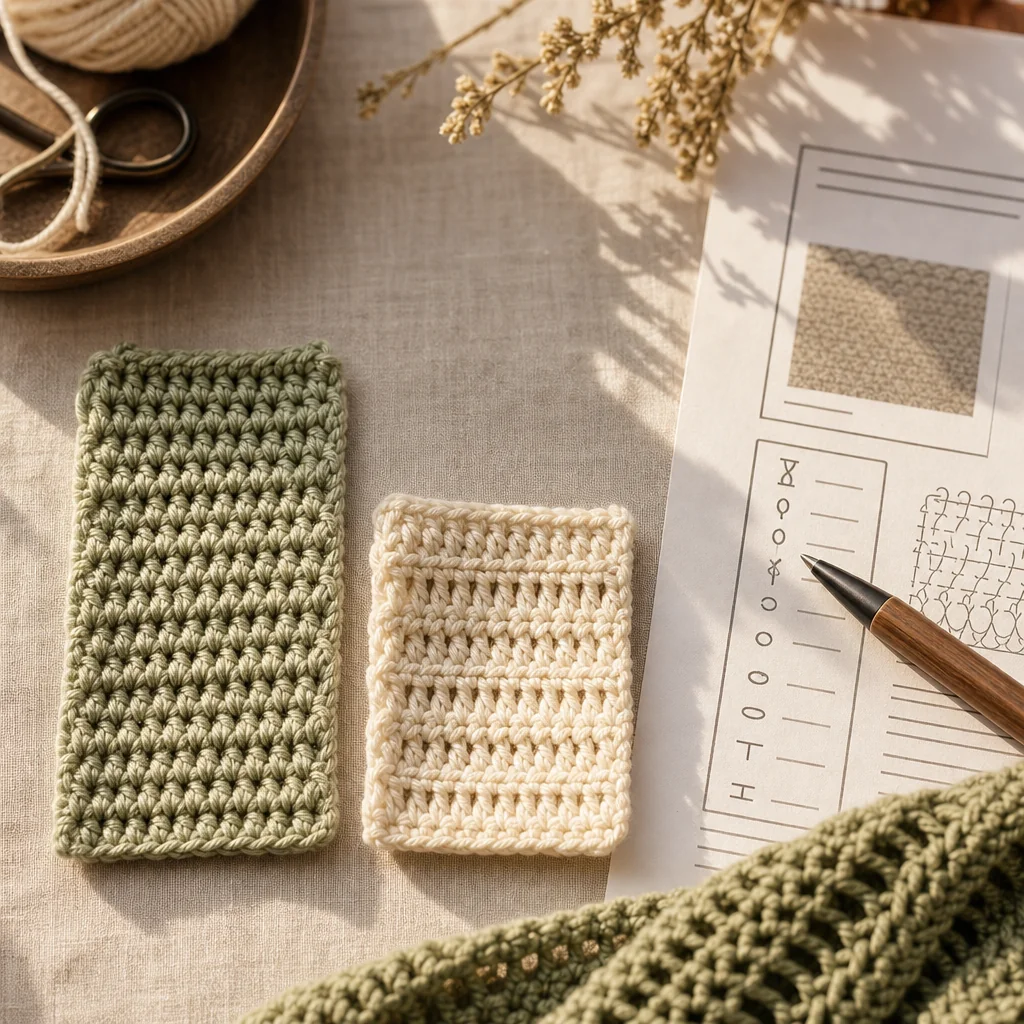
US vs. UK Crochet Terms: Master the Conversion So Your Stitches Match the Pattern
by Crochets Studio — Sarah is a Canadian crochet designer and pattern writer who specializes in accessible tutorials for beginners. She's been crocheting for over a decade and loves demystifying the techniques that intimidate new crafters.
US and UK crochet use completely different names for the same stitches, which is why your work might look nothing like the pattern photo. By learning this simple conversion system, you'll be able to tackle any pattern from any designer, no matter where they're located. This is essential knowledge for every crocheter.
Understanding the Terminology Mix-Up
You follow the pattern perfectly, stitch by stitch. But when you hold up your work next to the designer's photo, something's off. Your stitches are taller or shorter than they should be, and you can't figure out what went wrong.
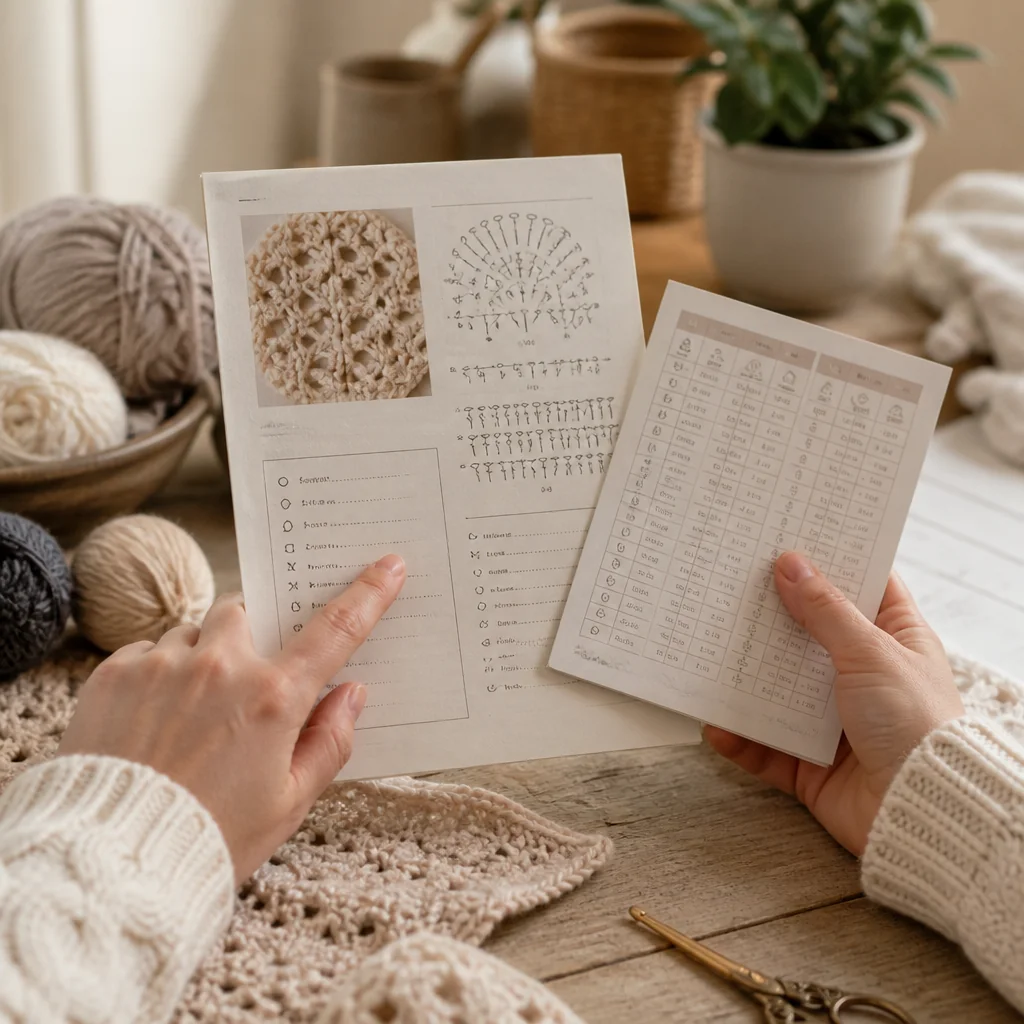
The problem might not be your technique—it might be your terminology.
Crochet terminology split into two main systems: US (United States) and UK (United Kingdom). The same physical stitch has different names depending on which system the pattern uses. A US double crochet is not the same height as a UK double crochet. In fact, a US double crochet is actually called a UK treble crochet. Confusing? Absolutely. But once you understand the system, you'll confidently work any pattern that crosses your desk.
Canadian crocheters have an advantage here: most North American patterns use US terminology, which means most of what you'll encounter locally will be consistent. But international patterns, vintage collections, and increasingly popular UK designers mean you need to know both systems.
The Complete Stitch Conversion Chart
Here's your reference guide. Bookmark this section or save a screenshot—you'll want it handy when you're starting a new project.
| US Term | UK Term | What It Looks Like | |---------|---------|-------------------| | Slip stitch (sl st) | Slip stitch (sl st) | A tiny connector stitch that joins rounds; both systems call it the same thing | | Single crochet (sc) | Double crochet (dc) | A short, dense stitch | | Half double crochet (hdc) | Half treble (htr) | A medium-height stitch, taller than single but shorter than double | | Double crochet (dc) | Treble (tr) | A tall stitch with height and drape | | Treble crochet (tr) | Double treble (dtr) | An even taller stitch used for lacier projects | | Double treble (dtr) | Triple treble (ttr) | A very tall, openwork stitch |
The pattern is simple once you see it: UK terms are always one "level" up from US terms. When you see a UK pattern, mentally subtract one level, and you'll know the actual height of the stitch you're making.
How to Identify Which System Your Pattern Uses
Most reputable patterns will clearly state "US terminology" or "UK terminology" right at the beginning. But not all patterns are that considerate, so here are ways to figure it out yourself:
Check the Designer's Location
If the pattern comes from a US or Canadian designer, it almost certainly uses US terms. UK, Australian, and European designers typically use UK terms. If you're buying from Etsy, Ravelry, or a designer's website, check their about page or country of residence.
Look at the Abbreviation List
Every pattern should include an abbreviation key. In US terminology, after the slip stitch, the "sc" (single crochet) is the shortest basic stitch. In UK terminology, the "dc" (double crochet) is the shortest basic stitch after the slip stitch. If you see this pattern, you've identified your system.
Check Gauge Information
Gauge is measured in stitches per 4 inches (or 10 cm). In US patterns, a typical gauge for worsted weight yarn might be 12 sc = 4 inches. In UK patterns, the same yarn would show something like 10 dc = 4 inches. The stitch count will be lower in UK patterns because the stitches are taller.
Count the Heights Yourself
If you're still unsure, make a small swatch using the stitches listed in the pattern. Compare the height to what you expect. If the pattern says to make a "double crochet" and your stitches come out much taller than you're used to, you're likely reading a UK pattern.
Working with Mixed Terminology
Once you've identified your system, you can convert the entire pattern in your head, or—here's a pro move—rewrite the key terms on a photocopy or digital copy before you start. Highlight every instance of the stitch abbreviations and note the equivalent in the system you're comfortable with.
Some crocheters prefer to work in their native system. Others say that once you've done it a few times, switching between systems becomes automatic. You'll find your own rhythm.
Real-World Example: A Simple Granny Square
Let's say you find a UK pattern for a granny square that calls for:
- 4 tr (treble) in the corner
- 2 tr between corners
In US terms, you would make:
- 4 dc (double crochet) in the corner
- 2 dc between corners
Your finished square will have the exact proportions the designer intended, even though you're using different terminology.
A Quirk: The Slip Stitch Stays the Same
One bright spot in this confusing system: the slip stitch is called the same thing in both US and UK terminology. It's used to join rounds and secure stitches, and it's identically short in both systems. Designers rarely need to specify which terminology they're using when a pattern includes only slip stitches, which is why this one stitch gets a free pass.
Canadian Advantage
As a Canadian crocheter, you're in a privileged position. Most patterns you'll find locally use US terminology because the North American yarn industry and design community operate under that system. This means you can work confidently through most projects without conversion headaches. That said, learning both systems makes you adaptable and opens up international design resources you might otherwise skip.
Next Steps: Start Your Pattern Decoder Practice
The best way to solidify this knowledge is to apply it. Grab a pattern you've been curious about but weren't sure how to read. Check the abbreviation key. Identify the system. Then, compare it to another pattern using the opposite system. See how the stitch heights differ? That's your brain making the connection stick.
Once you've done this a few times with real patterns, the conversion becomes instinctive. You won't need to think about it anymore—you'll just see the abbreviation and know exactly what to do.