How to Read a Yarn Label: Your Complete Guide to Every Symbol and Number
by Crochets Studio — A crochet enthusiast and fiber artist who believes that understanding yarn is half the battle. When not reading labels at the yarn store, you can find them experimenting with color combinations and drafting patterns for the next project.
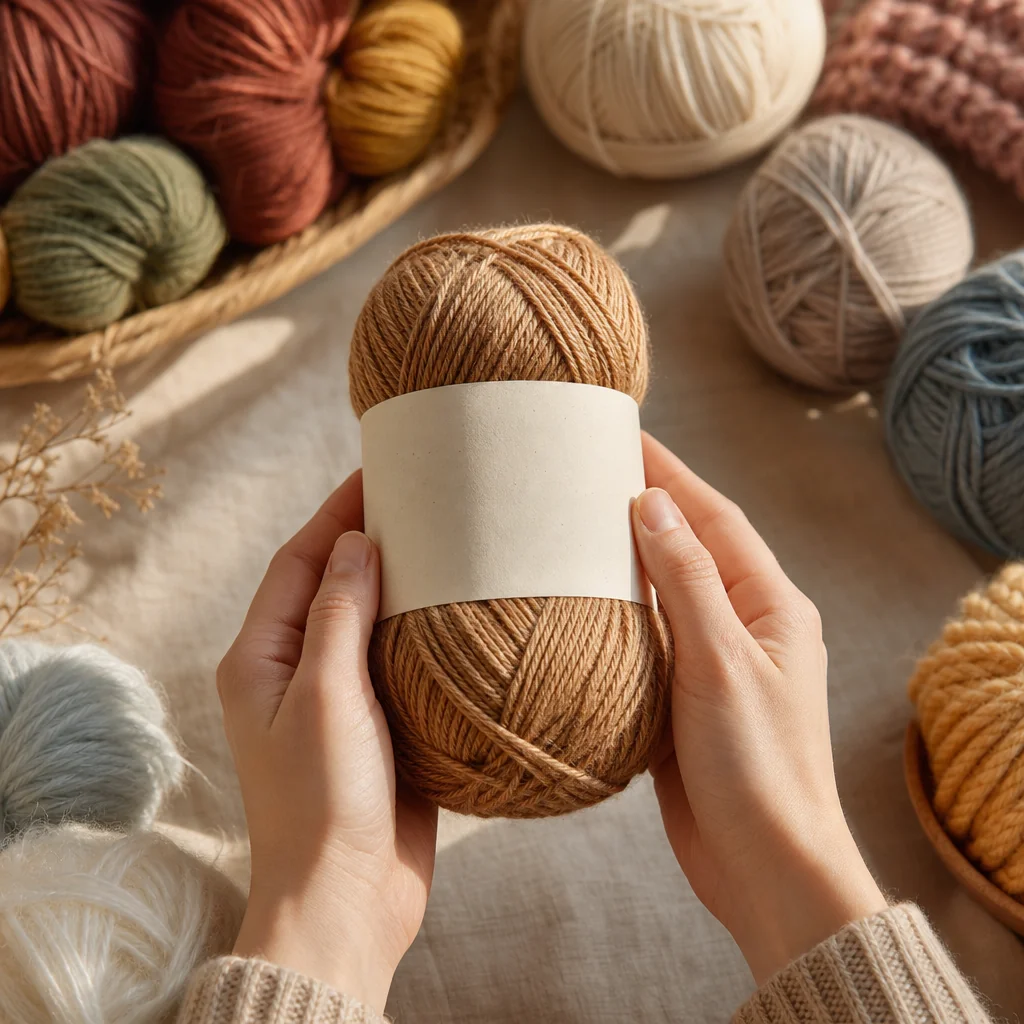
That little paper band wrapped around your yarn skein is actually a complete instruction manual in miniature. Learning to read it—from fiber content to care symbols to dye lot numbers—transforms you from a confused yarn shopper into a confident one. In this guide, we'll decode every element so you can make informed choices and avoid common beginner mistakes.
Why Yarn Labels Matter
When you're standing in the yarn aisle, it's easy to grab a ball based purely on color and move on. But that little label wrapped around your skein? It's your direct line to the yarn manufacturer, telling you everything you need to know about what you're about to buy and how to care for it later. Skipping the label is where most beginners run into trouble—buying yarn that doesn't work with their pattern, colors that don't match between skeins, or projects that fall apart after the first wash.
Taking thirty seconds to scan your yarn label before checkout can save you hours of frustration and wasted yarn down the road.
Understanding Yarn Weight
The weight symbol is one of the most important pieces of information on a yarn label, and it's the one that directly affects whether your project will look right.
Yarn weight is indicated by a number inside a small skein icon, ranging from 0 to 7. This number doesn't tell you how heavy the yarn feels in your hands—it tells you the thickness of the individual strands.
- 0 (Lace): The finest yarns, almost thread-like. Used for delicate, openwork projects.
- 1 (Super Fine): Very thin, creating intricate details. Perfect for shawls and lightweight garments.
- 2 (Fine): Still delicate but more forgiving. Great for baby items and fine lacework.
- 3 (Light Worsted): The sweet spot for many projects. Versatile and comfortable to work with.
- 4 (Worsted/Medium): The most common weight. Works up quickly and is beginner-friendly.
- 5 (Bulky): Thick and fast-working. Creates cozy blankets and chunky sweaters.
- 6 (Super Bulky): Very thick strands. Projects come together in hours instead of weeks.
- 7 (Jumbo): The chunkiest option, sometimes requiring your fingers instead of a hook.
The weight matters because it determines your gauge—how many stitches and rows fit into a measured space. A pattern written for worsted weight yarn will look completely different if you substitute it with lace weight, even if you use the same stitch pattern.
Matching Weight to Your Pattern
Always check what weight your crochet pattern calls for before you buy yarn. If a pattern is designed for worsted weight (4) and you use bulky (5) instead, your finished piece will be smaller, and the proportions might look off. The stitches might even feel too tight or too loose depending on how your tension adjusts.
When you're starting out, stick to patterns that match the yarn weight in your stash. Once you understand how gauge works, you can get creative with substitutions.
Yardage and Meterage: The Real Measurement
Here's where beginners often get tripped up: two skeins can weigh the same but contain completely different lengths of yarn.
Yardage (or meterage in Canada) tells you how much yarn is actually in that ball. This number is more important than the weight in ounces or grams, because what matters for a project is length, not heaviness. A 50-gram ball of lace weight yarn might have 400 yards, while a 50-gram ball of bulky yarn might have only 80 yards.
Look for both measurements on your label:
- Yards and meters
- Grams and ounces
When you're substituting yarn for a pattern, always match the yardage, not the weight. If a pattern calls for 800 yards of worsted weight, you need 800 yards of yarn—whether that comes in one ball or five, whether it weighs 200 grams or 250 grams.
This is why buying based on looks alone at the store fails so often. That gorgeous skein might be half the length of what you actually need.
Hook Size Recommendations
Most yarn labels include a suggested hook size, shown as a number inside a little crochet hook icon. This is your starting point, not your final answer.
The manufacturer suggests this size based on how the yarn typically works up, but your personal tension might require adjusting up or down by a half-size or full size. Someone with very tight tension might need to go up a size to prevent their stitches from becoming stiff, while someone with loose tension might go down a size to tighten things up.
Make a gauge swatch before starting any project, and don't be afraid to ignore the hook size recommendation if your gauge demands it. The gauge matters infinitely more than following a suggestion on the label.
Care Symbols: Keeping Your Project Wearable
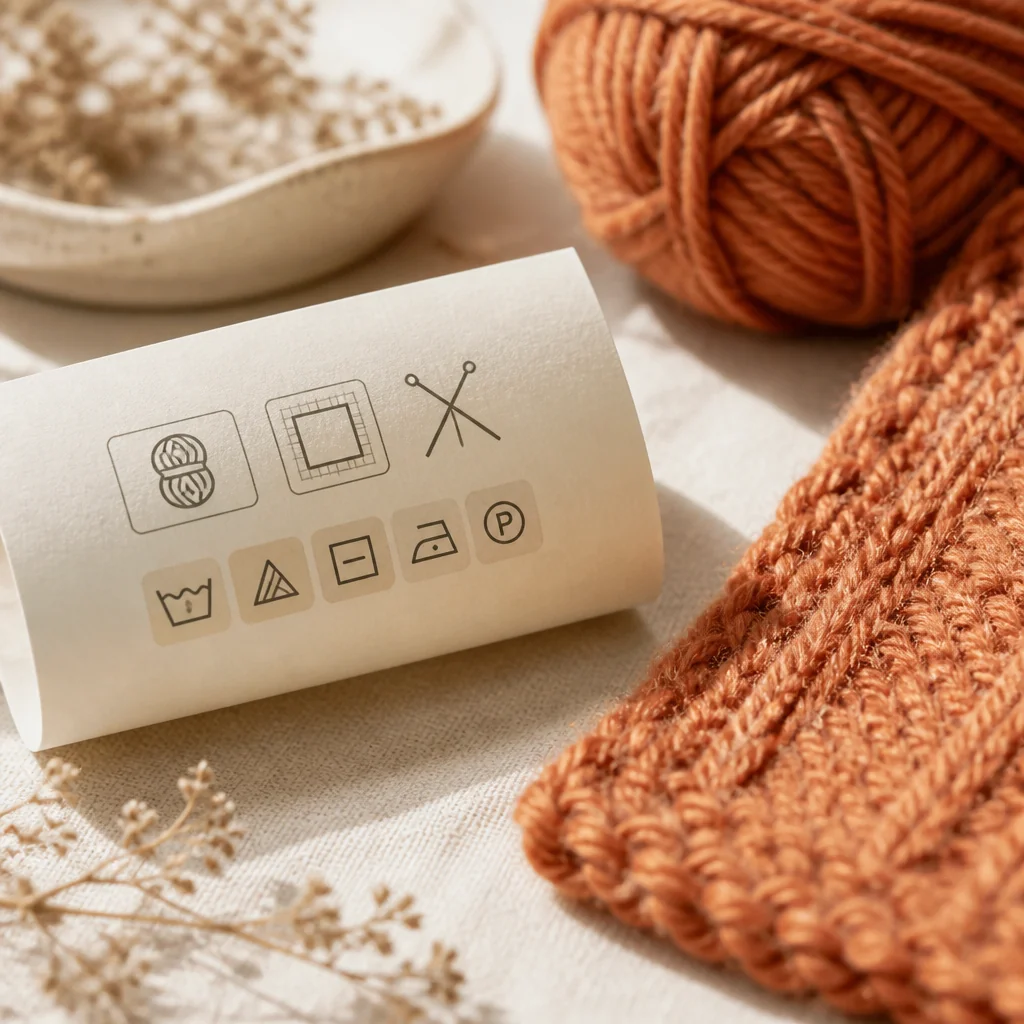
Once you finish your project, you need to know how to care for it. The care symbols on yarn labels are standardized internationally, so they look the same whether your yarn comes from Canada, Japan, or Europe.
Common care symbols include:
Washing Instructions
- Washtub symbol: Can be machine washed. The temperature is shown by dots inside the tub.
- Crossed-out washtub: Do not wash in a machine. Hand wash only.
- Washtub with one line underneath: Gentle machine wash cycle.
- Washtub with two lines underneath: Delicate/synthetic cycle.
Bleaching
- Triangle symbol: Can be bleached if needed.
- Crossed-out triangle: Do not bleach.
- Triangle with diagonal lines: Only non-chlorine bleach allowed.
Drying
- Square symbol: Can be tumble dried. Dots indicate heat level.
- Crossed-out square: Do not tumble dry. Air dry instead.
- Square with circle inside: Can be tumble dried on low heat.
Ironing
- Iron symbol: Can be ironed. Dots show safe temperature.
- Crossed-out iron: Do not iron.
Dry Cleaning
- Circle symbol: Safe for professional dry cleaning.
- Crossed-out circle: Do not dry clean.
Always check these symbols before you wash your finished project. Some fibers need cold water and gentle handling, while others can handle a regular wash cycle. Ignoring these instructions is the fastest way to ruin hours of work.
Dye Lot: The Number That Prevents Regret
This is the single most important thing beginners ignore—and the thing they regret ignoring.
Every time a yarn manufacturer dyes a batch of yarn, they assign it a dye lot number printed on the label. Skeins from the same dye lot will match perfectly. Skeins from different dye lots might match, but they might also have subtle—or not-so-subtle—color variations.
When you're buying yarn for a project that needs multiple skeins, always buy enough from the same dye lot. If you buy three skeins from dye lot 2847 and later realize you need a fourth skein, don't grab one from dye lot 2851 unless you want a visible stripe running through your sweater.
If the store doesn't have enough skeins from the same dye lot, ask if they can order more, or reconsider your project. It's better to adjust your pattern than to finish it and wish you had.
Fiber Content: How Your Yarn Will Behave
The fiber content tells you what the yarn is actually made from. This dramatically affects how your finished project will look, feel, and wear.
Wool: Natural, breathable, and warm. Wool holds its shape well and is great for structured projects. It can felt if washed incorrectly, and some people find it itchy. Merino and superwash wool are softer and easier to care for.
Acrylic: Budget-friendly, easy to care for, and available in endless colors. Acrylic doesn't have the same drape or warmth as natural fibers, and it can pill. It's perfect for learners and projects that need to be durable and washable.
Cotton: Breathable and great for summer projects. Cotton doesn't have much elasticity, so stitches can look looser. It requires proper blocking to look its best and can shrink if not washed carefully.
Blends: Mixing fibers gives you the best qualities of each. A wool-acrylic blend might be softer than pure acrylic but cheaper than pure wool, and easier to care for than pure wool.
Specialty fibers: Bamboo, linen, silk, and alpaca each bring unique qualities. They're usually pricier but worth it for special projects.
Understanding your fiber content helps you choose yarn that will work for the type of project you're making. A summer tank needs different fibers than a winter sweater.
Reading the Full Picture
Yarn labels pack a lot of information into a tiny space, and it takes practice to scan everything quickly. But once you know what to look for, choosing yarn becomes intuitive.
Before you buy, check:
- Does the weight match your pattern?
- Is there enough yardage for your project?
- Are the care instructions suitable for how the piece will be used?
- Is there enough of the same dye lot in stock?
- Will the fiber content work for what you're making?
These five questions will keep you out of trouble and turn you into the person at the yarn store who actually knows what they're doing.
Next step
Explore our complete yarn guide