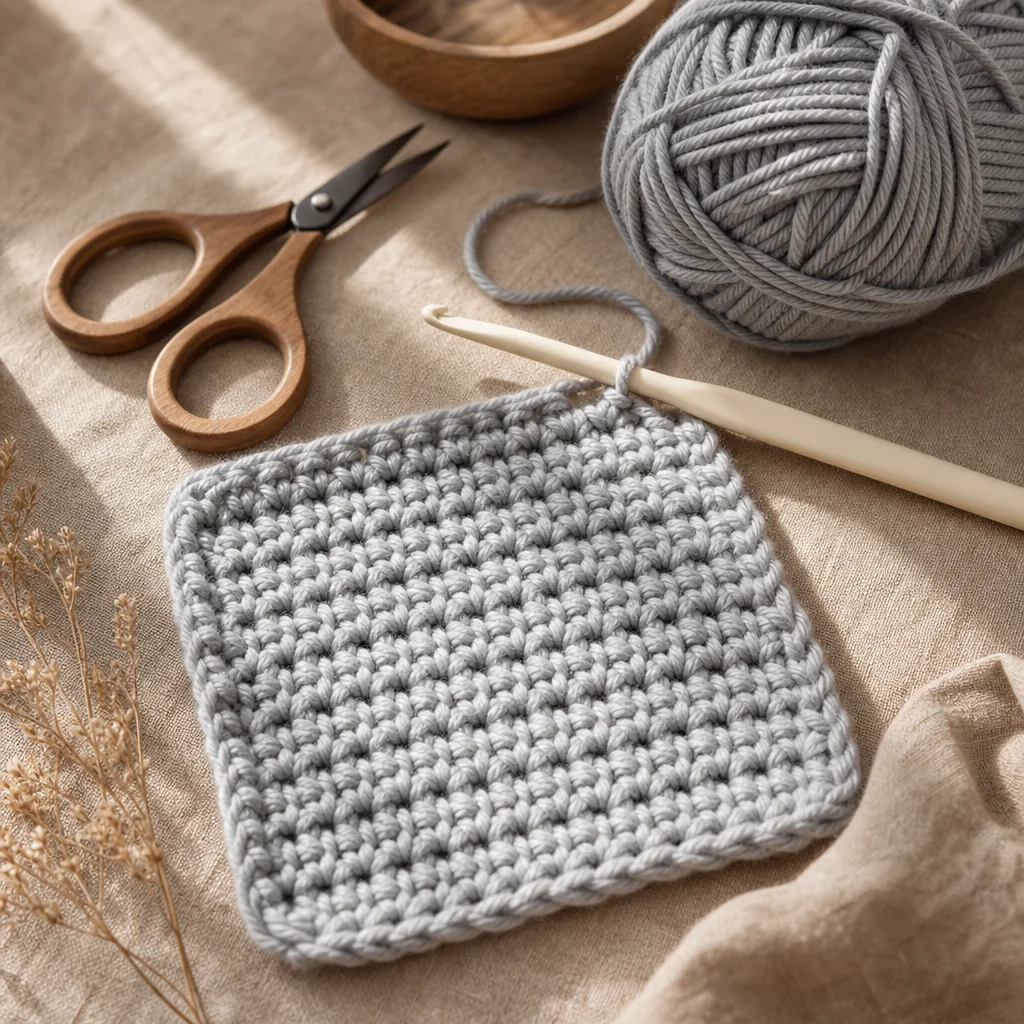
Crochet for Absolute Beginners: Your Complete 7-Day Starter Guide
by Crochets Studio — Sarah has been teaching crochet to beginners for over six years and believes that starting simple is the secret to lasting creative confidence. She lives in Toronto and is always working on her next project.
Crochet doesn't have to be intimidating—breaking it into seven focused days makes it completely manageable and genuinely fun. Each day builds on the last, so by day seven, you'll have real skills and a finished dishcloth you can actually use.
Getting Started: Why Seven Days Works
Learning crochet works best when you build momentum through small daily wins rather than overwhelming yourself with everything at once. A seven-day plan gives your hands time to develop muscle memory while keeping your motivation high. You're not committing to months of practice—just one week to prove to yourself that you can do this.
Each day focuses on one clear goal. Some days are about learning, others are about practice and repetition. By the end of the week, you'll have created something tangible: a finished dishcloth that proves your skills are real.
Materials You'll Need
Before day one begins, gather these essentials:
- Crochet hook: Size H/8 (5mm). This medium size is forgiving and easy to hold.
- Yarn: Medium weight (often labeled as "4" or "Worsted") in a light, solid color. Light colors help you see your stitches clearly. Avoid dark yarns and fuzzy textures for your first project—they hide mistakes, which means you won't learn from them.
- Scissors: For cutting yarn.
- Yarn needle: Also called a tapestry needle, for weaving in ends.
- Stitch marker: A paperclip works fine if you don't have one yet.
That's genuinely all you need. No expensive kits, no complicated tools.
Day 1: Gather Your Supplies and Set Your Space
Today is about preparation, not panic. Visit a local yarn shop or craft store and pick out your supplies. If you're shopping online, add everything to your cart and order it together—shipping will likely be cheaper than buying separately.
While you wait for supplies to arrive (or while you have them), set up a comfortable, well-lit space where you'll practice. A chair with good back support, a small table, and natural light make a huge difference. You don't need anything fancy—your kitchen table works perfectly.
Spend the rest of the day getting excited about starting. Watch a couple of beginner crochet videos if you like, but don't try to absorb everything. Just get a sense of what's coming.
Day 2: Learn to Hold Your Hook and Tension Your Yarn
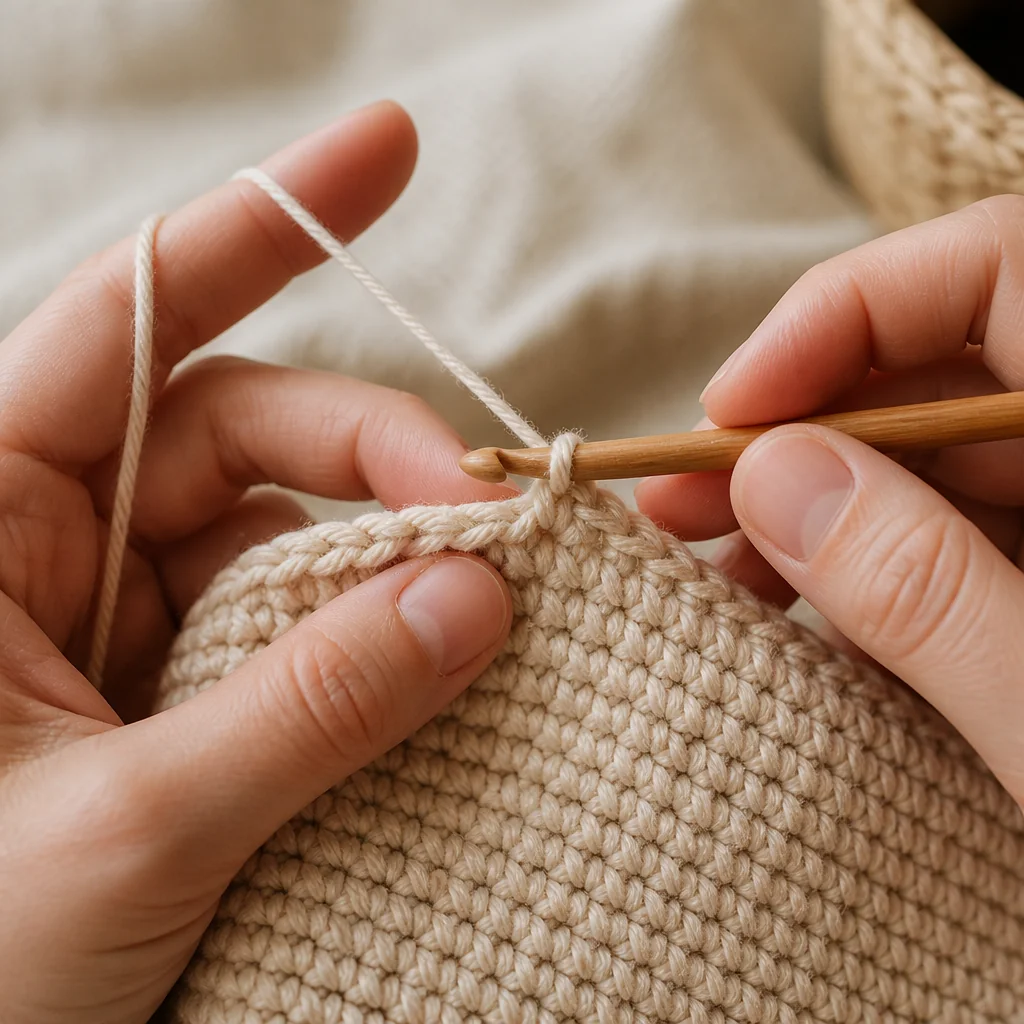
Now that you have your supplies, it's time to get familiar with them. There are two main ways to hold a crochet hook: like a pencil or like a knife. Try both and stick with whichever feels more natural—there's no right answer, only what works for your hand.
Next, practice tensioning yarn through your fingers. Yarn tension is how you control the tightness of your stitches. Most crocheters thread yarn over their index finger and under their middle and ring fingers. Experiment with this until it feels stable but not cramped.
Spend 15-20 minutes just getting comfortable. Hold the hook while watching TV. Let your hand adjust to the weight and feel of it. This isn't about being perfect; it's about familiarity.
Day 3: Master the Foundation Chain
The chain stitch is the foundation of nearly every crochet project. Today, you'll make lots of chains until they start looking even.
A chain begins with a slip knot on your hook. Then, you yarn over (wrap yarn around the hook) and pull through the loop on your hook. Each pull creates a new chain link.
Aim to create chains of 20-30 stitches, then start over. You'll probably notice your early chains are tight or uneven—that's completely normal. Your tension will improve with repetition. Make chains until your hand starts to feel like it knows what it's doing. You're not rushing; you're building muscle memory.
By the end of today, your chains should look noticeably more even than they did at the start. That improvement is real progress.
Day 4: Learn the Single Crochet Stitch
Single crochet is the most fundamental stitch in crochet. It's the building block for countless projects. Today, you'll learn it and start making your first rows.
Make a chain of 15 stitches. Then, insert your hook into the second chain from your hook and work a single crochet stitch. The single crochet involves three main movements: insert your hook, yarn over, and pull through—then yarn over again and pull through both loops on your hook.
Work single crochet stitches across your entire chain. Your row probably won't be perfect. Stitches might be loose, or the edges might be wonky. That's okay. You're learning, not producing gallery-quality work.
Make three or four rows of single crochet, creating a small rectangle. By the end of the day, you'll have tangible evidence that you can crochet.
Day 5: Practice Rows and Build Consistency
Today is about repetition. Make a new chain of 20 stitches and work single crochet rows back and forth until you have a small square or rectangle. Don't aim for perfection—aim for consistency.
You'll notice your tension improving as you work. Your stitches will become more even, and your edges will become straighter. This is what practice looks like. Repetition is where real skill develops.
If you get frustrated, take a break. Crochet should be enjoyable, not stressful. Even 15 minutes of focused practice today is enough to build on tomorrow.
Day 6: Learn to Finish Your Work (Fasten Off)
You need to know how to properly end a crochet project so it doesn't unravel. Fastening off is simple: cut your yarn, leaving a few inches, and pull the tail through the final loop on your hook. Pull tight.
If your project has a long yarn tail, you'll use your yarn needle to weave it back through your stitches to hide it. This is called "weaving in ends."
Practice fastening off on one of your practice pieces from earlier days. It takes 30 seconds once you know how, but knowing how matters.
Day 7: Make Your First Dishcloth
Today, you bring everything together. You're going to crochet a simple square dishcloth using everything you've learned this week.
Make a chain of 25 stitches. Work single crochet rows back and forth until you have a square (approximately 25 rows). Then fasten off, weave in your ends, and you're done.
That square dishcloth is a real crochet project. You made it. It's functional—you can actually use it in your kitchen. And more importantly, it's proof that you can crochet.
What You've Accomplished
After seven days of focused practice, you've learned:
- How to hold a hook comfortably
- How to tension yarn for consistent stitches
- How to make a foundation chain
- How to work single crochet stitches
- How to create rows and build fabric
- How to fasten off and finish your work
You've also made a finished project. That's not nothing. That's the foundation for everything else in crochet.
What's Next?
You're ready to keep going. The next logical step is learning additional stitches—double crochet and half double crochet—which open up hundreds more project possibilities. After that, you might explore simple patterns, shaping techniques, or specialty stitches.
But for now, take a moment to appreciate what you've built this week. You came in knowing nothing about crochet, and you're leaving with real skills and a finished piece to show for it. That's worth celebrating.