Broomstick Lace and Hairpin Lace: What's the Difference?
by Crochets Studio — A lifelong fibre artist based in Eastern Ontario, our contributor learned lace techniques from her grandmother's vintage pattern books and has been teaching advanced crochet workshops for over a decade.
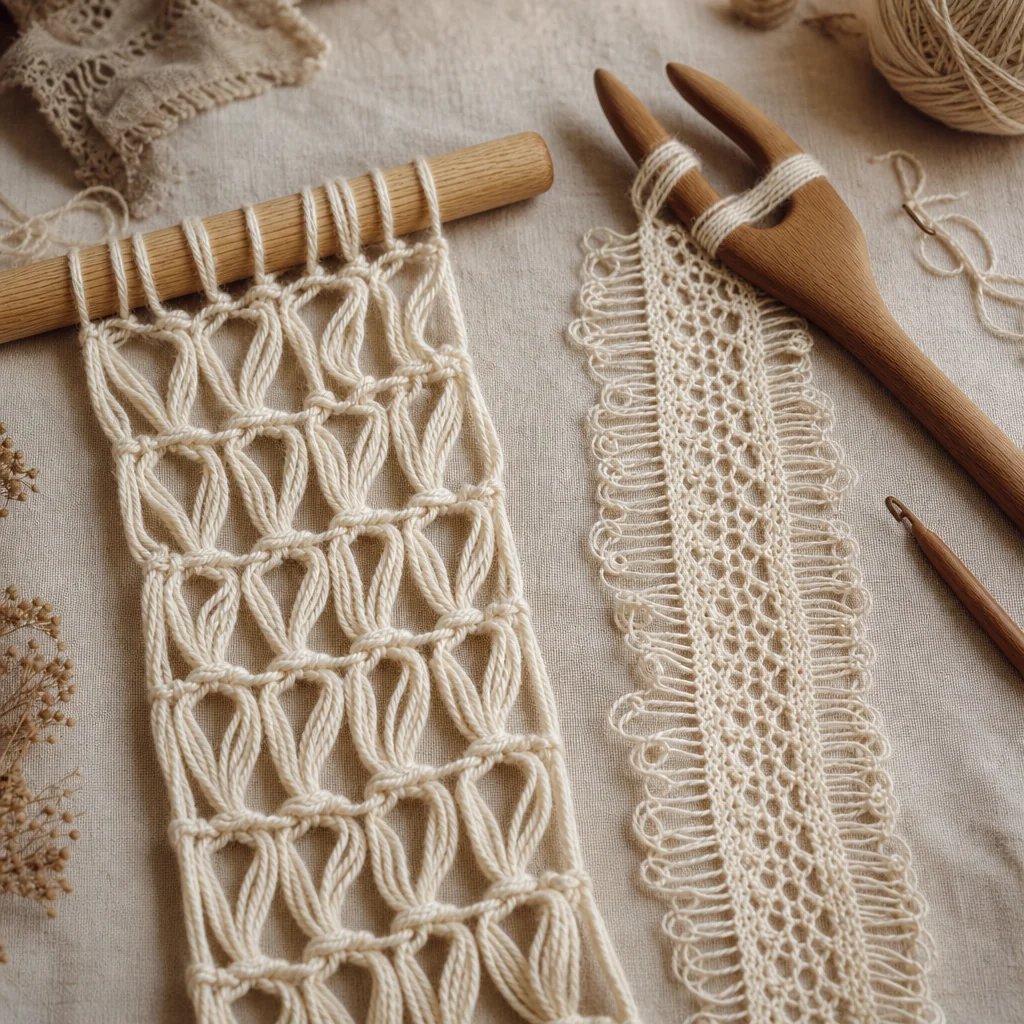
Broomstick lace and hairpin lace are both advanced crochet techniques that produce airy, looped fabric using a secondary tool alongside your hook. The key difference lies in the tool itself and how the loops are formed: broomstick lace slides loops onto a large rod and crochets them together in groups, while hairpin lace wraps yarn around a two-pronged fork to build long, narrow strips joined afterward. This guide breaks down both techniques side by side so you can choose the right one for your next lace project.
Broomstick Lace and Hairpin Lace: What's the Difference?
Broomstick lace and hairpin lace are both advanced crochet techniques that produce airy, looped fabric using a secondary tool alongside your hook. The key difference lies in the tool itself and how the loops are formed: broomstick lace slides loops onto a large rod and crochets them together in groups, while hairpin lace wraps yarn around a two-pronged fork to build long, narrow strips joined afterward. This guide breaks down both techniques side by side so you can choose the right one for your next lace project.
Understanding Broomstick Lace
What It Is
Broomstick lace — sometimes called jiffy lace or peacock stitch — is a crochet technique that creates rows of large, decorative loops organized into vertical columns. The name comes from the original tool: a literal broomstick handle. Today, most crocheters use a large knitting needle (usually 19 mm to 35 mm), a thick wooden dowel, or a dedicated broomstick lace pin.
How It Works
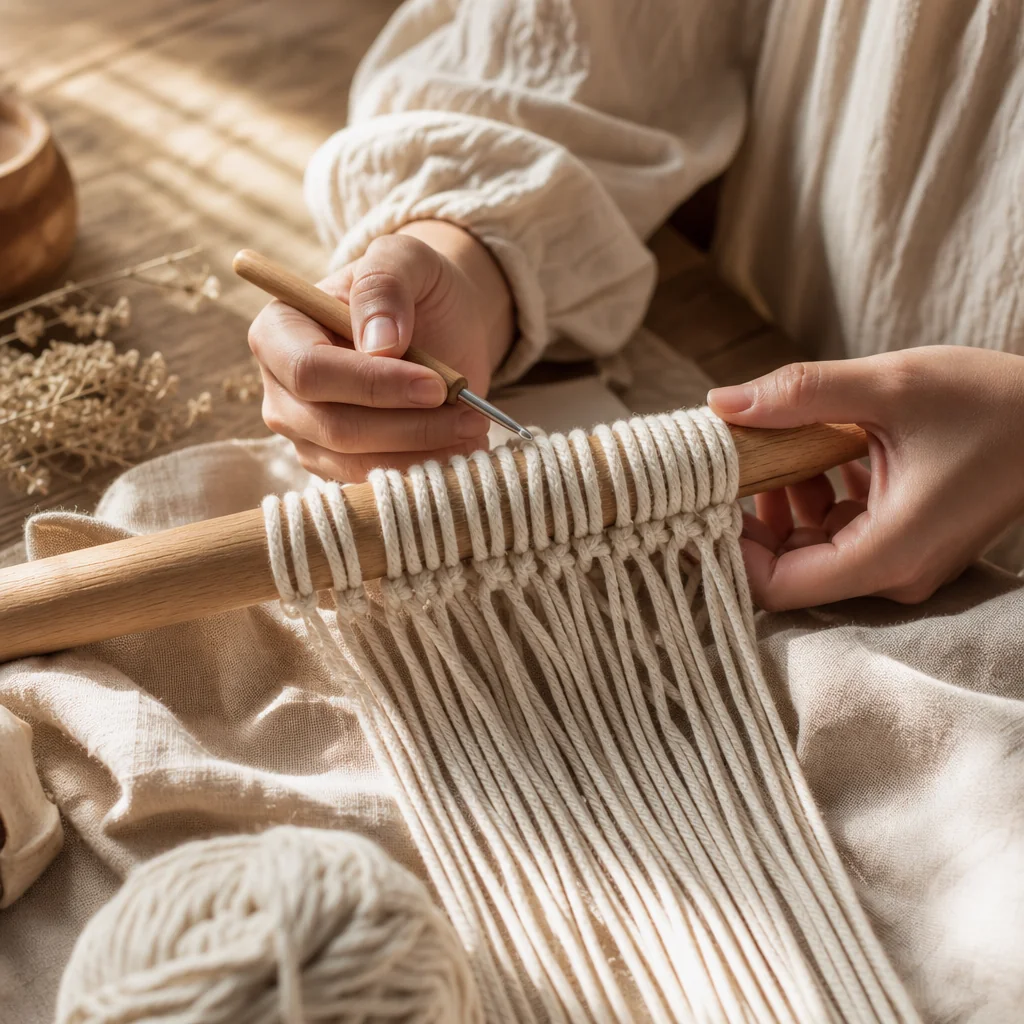
The process alternates between two types of rows. In the loop row, you draw up a loop from each stitch in the previous row and slide it onto your rod, keeping all loops on the shaft. In the grouping row, you slide a set number of loops off the rod (commonly three to five at a time), insert your hook through the entire group, and work a cluster of single crochet stitches into them. This pulls the loops together into a fan-shaped bundle while also creating the foundation for the next loop row.
Characteristics of Broomstick Lace Fabric
- Drape: Exceptionally fluid. The oversized loops give the fabric a soft, flowing quality that works beautifully in shawls, wraps, and lightweight scarves.
- Directionality: The loops sit in vertical columns running perpendicular to the row direction, giving the fabric a distinctive ribbed appearance.
- Width: You can work broomstick lace to any width, just like standard crochet rows. It produces a flat panel rather than a strip.
- Stretch: Moderate horizontal stretch due to the open loop structure; minimal vertical stretch.
- Yarn weight compatibility: Works with anything from lace weight to bulky, though DK and worsted weights show off the loop structure best.
Best Uses for Broomstick Lace
- Shawls and wraps
- Lightweight infinity scarves
- Decorative blanket panels (alternated with solid stitch sections)
- Summer tops and cover-ups
- Statement headbands and cowls
Understanding Hairpin Lace
What It Is
Hairpin lace uses a U-shaped metal or plastic tool called a hairpin loom, hairpin lace fork, or hairpin lace frame. The loom consists of two parallel prongs held apart at a fixed distance by removable bars at the top and bottom. Loom widths typically range from 2.5 cm to 10 cm, and you choose the width based on the loop length you want.
How It Works
You begin by wrapping yarn around the loom and working a single crochet (or chain) in the center between the prongs. Then, with each new wrap, you rotate the loom, wrap the yarn around the opposite prong, and work another center stitch to secure the loop. This builds a long strip with a crocheted spine running down the middle and free loops extending out on both sides. Once a strip reaches the desired length, you remove it from the loom and join it to other strips using various crochet join methods.
Characteristics of Hairpin Lace Fabric
- Drape: Extremely open and delicate. The loops create a lacier, more ethereal look than broomstick lace.
- Directionality: The loops extend horizontally from a vertical center spine, creating symmetrical wings on each side of the strip.
- Width: Each strip has a fixed width determined by the loom. Final fabric width is built up by joining multiple strips side by side.
- Stretch: High lateral stretch in the loops; the center spine is relatively stable.
- Yarn weight compatibility: Performs best with finer yarns (fingering to DK weight) that let the loops stay distinct without becoming bulky.
Best Uses for Hairpin Lace
- Elegant wraps and stoles
- Table runners and doilies
- Curtain panels
- Lace inserts in garments
- Bridal accessories and veils
- Decorative edgings
Side-by-Side Comparison
Tool
| Feature | Broomstick Lace | Hairpin Lace | |---|---|---| | Secondary tool | Large rod, dowel, or knitting needle | U-shaped forked loom with two prongs | | Tool function | Holds loops temporarily while you build a row | Frames and shapes loops as you build a strip | | Tool stays in work? | No — loops are slid off after each group | No — strip is removed when loom is full |
Construction Method
| Feature | Broomstick Lace | Hairpin Lace | |---|---|---| | Work direction | Row by row (like standard crochet) | Strip by strip, then joined | | Fabric shape | Flat panel of any width | Narrow strips joined together | | Loop formation | Pulled up from existing stitches | Wrapped around prongs during construction | | Joining required? | No — fabric is continuous | Yes — strips must be joined |
Visual Result
| Feature | Broomstick Lace | Hairpin Lace | |---|---|---| | Loop orientation | Vertical columns | Horizontal wings from center spine | | Overall look | Ribbed, fan-like clusters | Symmetrical, ladder-like lace | | Openness | Moderately open | Very open and airy | | Texture | Soft, flowing, slightly chunky | Delicate, ethereal, flat |
Common Confusions and How to Resolve Them
"They both use loops, so aren't they the same?"
The loops serve different structural purposes. In broomstick lace, the loops are a transitional stage — they exist on the rod only long enough to be grouped and crocheted together. In hairpin lace, the loops are the finished product. They remain as open loops in the final fabric and define its character.
"Can I substitute one for the other in a pattern?"
Generally, no. The gauge, drape, and construction are fundamentally different. A broomstick lace shawl worked flat in rows cannot be replicated with hairpin lace strips without redesigning the entire piece. However, if you simply want an open, lacy look, either technique can achieve that goal through different means.
"Which is easier to learn?"
Most crocheters find broomstick lace slightly easier to pick up because it builds directly on standard single crochet skills. You're essentially adding one extra step (pulling loops onto a rod) to a familiar process. Hairpin lace requires learning to manage the loom, rotate it consistently, and join strips afterward, which involves a bit more coordination at first.
Choosing the Right Technique for Your Project
Choose broomstick lace when:
- You want a single continuous fabric without assembly
- You prefer a chunkier, more textured look with visible clusters
- Your project needs moderate drape with some body (scarves, cowls, blanket panels)
- You want to work with thicker yarns
- You don't want to invest in a specialized tool (any large rod will do)
Choose hairpin lace when:
- You want maximum openness and an ethereal, delicate result
- Your project is decorative and lightweight (table linens, wedding accessories, curtain panels)
- You enjoy modular construction and joining techniques
- You prefer working with finer yarns
- You want uniform, symmetrical loops on both sides of a center line
Tips for Getting Started with Each Technique
Broomstick Lace Tips
- Start with a smooth, wooden dowel or large knitting needle in the 19–25 mm range. Metal needles can be slippery and let loops slide off unexpectedly.
- Use a yarn with good stitch definition (cotton or a smooth wool blend) so you can clearly see each loop.
- Count your loops after sliding them onto the rod. Losing or gaining a loop throws off the entire grouping row.
- Keep your tension consistent when pulling up loops. Uneven loops create an irregular finished fabric.
- Practice with groups of five loops clustered with five single crochets — it's the most common configuration and produces a balanced result.
Hairpin Lace Tips
- An adjustable-width hairpin loom gives you the most flexibility. Start at a medium width (about 5 cm) to learn the motion.
- Mark the front of your loom with a piece of tape so you always know which direction you're rotating.
- Keep your center stitches consistent and avoid pulling them too tightly, or your strip will curve instead of lying flat.
- Make your strips longer than you think you'll need. It's easier to leave extra loops unworked than to add length later.
- Experiment with different joining methods — basic slip stitch joins create a different look than woven or crocheted joins between strips.
Combining Both Techniques
Advanced crocheters sometimes combine broomstick lace and hairpin lace in a single project for visual contrast. A shawl might feature a central panel of broomstick lace flanked by hairpin lace edgings, or a table runner could alternate broomstick lace sections with joined hairpin lace strips. The textural difference between the two creates a layered, dimensional effect that showcases both techniques beautifully.
Ready to Try Advanced Lace Techniques?
Both broomstick lace and hairpin lace reward patience and practice with stunning results you can't achieve through standard crochet alone. If you're ready to explore these techniques further, browse our advanced technique tutorials and find the tools you need to get started.