Andean and Peruvian Tapestry Crochet: Traditions, Techniques, and Timeless Motifs
by Crochets Studio — A fibre artist and textile researcher fascinated by traditional techniques from mountain cultures, with a particular love for the patience and symbolism woven into Andean crochet and weaving.
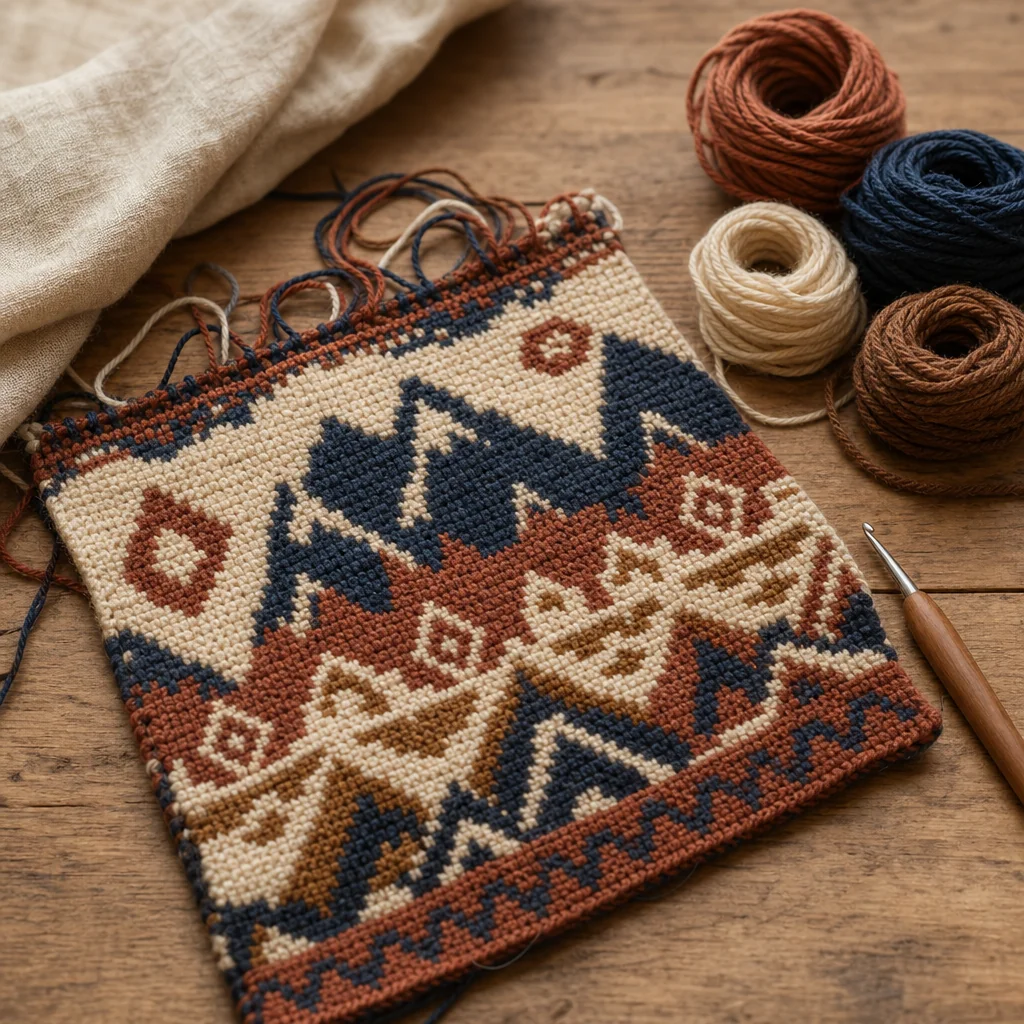
Andean and Peruvian tapestry crochet creates dense, pictorial fabrics using colour-carrying techniques and symbolic motifs that reflect centuries of textile storytelling. Worked primarily in single crochet with multiple colours carried throughout each row, these pieces combine bold geometric patterns with cultural significance. Learning this advanced technique connects you to a living tradition rooted in the mountains of Peru and Bolivia.
The Roots of Andean Textile Craft
In the high-altitude communities of Peru and Bolivia, crochet and weaving have existed side by side for generations, each craft informing the other. While weaving on backstrap looms remains the older technique, crochet—introduced through colonial contact and later adopted and transformed—now carries forward the same symbolic visual language. Tapestry crochet, specifically, creates the dense, colourful fabrics that echo traditional woven textiles, using carried yarn and tight stitches to produce images that seem to float across the surface.
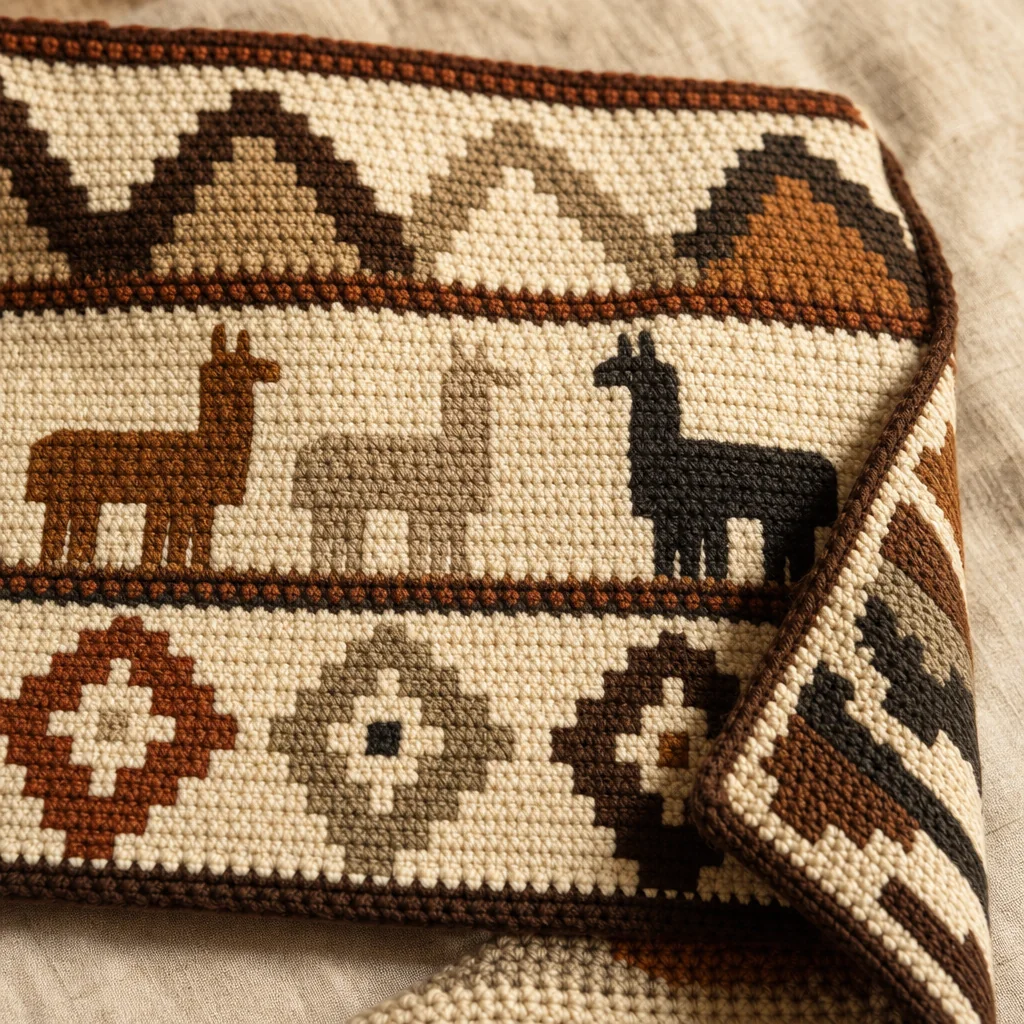
These textiles aren't decorative alone. They mark identity, celebrate agricultural cycles, honour the sacred landscape, and keep wearers warm in thin mountain air. A chullo hat with llama motifs isn't just a hat—it's a wearable story, a connection to ancestors, and a practical piece of cold-weather gear all at once.
Understanding Tapestry Crochet Construction
Tapestry crochet differs from standard colourwork in one key way: all colours travel with you across every row. Instead of joining new yarn when you need a colour change, you carry the unused strands inside your stitches, trapping them as you work. This creates a double-thick fabric with no floats on the back, resulting in a textile that's warm, sturdy, and fully reversible in structure (though the colour pattern shows differently on each side).
Most Andean tapestry crochet is worked in single crochet using wool or alpaca yarn. The stitch is short and tight, which allows for pixel-like precision when following charted designs. Because tension must remain consistent to keep motifs crisp and legible, this technique demands focus and rhythm.
How Colour Carrying Works
When you're working with two colours—let's call them A and B—you hold both strands together as you crochet. To make a stitch in colour A, you work the single crochet as usual but trap colour B inside the stitch by crocheting over it. When it's time to switch to colour B, you simply pick up that strand for the next stitch and let colour A become the carried yarn.
The trick is maintaining even tension on both the working yarn and the carried yarn. If the carried strand is too loose, your fabric will pucker. If it's too tight, the stitches will pull inward and distort your motifs. This is why Andean crocheters often work with deliberate slowness, prioritizing evenness over speed.
Symbolic Motifs and What They Mean
Andean tapestry crochet motifs are rarely arbitrary. Most designs reference the natural world, agricultural life, or spiritual beliefs that have been central to mountain communities for centuries.
Common Symbols You'll See
Llamas and Alpacas: These animals are central to Andean life, providing wool, meat, and transport. Their presence in textiles honours their importance and often signals prosperity or abundance.
Condors: Revered as sacred messengers between earth and sky, condors appear in ceremonial and everyday textiles alike. Their broad wings are often stylized into geometric shapes.
Mountains (Apus): Mountains are considered living beings and protectors in Andean cosmology. Step patterns and zigzag lines frequently represent mountain ranges or the act of ascending sacred peaks.
Geometric Steps and Diamonds: These shapes can symbolize agricultural terraces, the duality of existence (day/night, life/death), or the layers of the cosmos in traditional Andean belief systems.
Chakana (Andean Cross): A stepped cross motif representing the connection between worlds—often showing up in borders or as a central medallion.
Each community, and even each family, may have variations on these motifs, so there's no single "correct" interpretation. What matters is that the designs carry meaning forward and remain recognizable across generations.
Essential Techniques for Tapestry Crochet
Tension Control
Your hands need to become consistent machines. Practice holding both yarns with equal firmness, and make every stitch the same height. Uneven tension will make geometric patterns look wobbly or cause colour bleeding where sharp edges should exist. Start with swatches before committing to a full project.
Reading Charts
Most tapestry crochet patterns are presented as charts, with each square representing one single crochet stitch. Colours are marked with symbols or shaded blocks. You read charts from bottom to top (since you're building upward) and typically from right to left on RS rows if working flat, or continuously in one direction if working in the round.
Before beginning, highlight or mark your place on the chart. It's easy to lose your row when you're focused on yarn tension.
Working in the Round
Many traditional Andean pieces—hats, bags, even some ponchos—are worked seamlessly in the round. This eliminates seaming and keeps the fabric structurally strong. When working in the round with tapestry crochet, you'll notice a slight jog where each round begins. You can minimize this with a jogless join technique, though many traditional pieces simply embrace the jog as part of the handmade aesthetic.
Starting and Ending Colours
Since you're carrying yarn throughout, you don't cut and weave in ends at every colour change. Instead, plan your starts and ends at the edges or less visible areas of your work. When you do need to join a new ball, splice or weave the tails into the carried strands within the fabric as you go.
Trying Tapestry Crochet Yourself
This isn't a beginner technique, but if you're comfortable with single crochet and ready to level up, tapestry crochet offers immense satisfaction.
Materials to Start With
- Yarn: Choose a smooth, non-splitty wool or wool blend in a DK or worsted weight. Alpaca is traditional and beautifully warm, but any wool will work. Start with two high-contrast colours.
- Hook: Use a hook one size smaller than the yarn label suggests to achieve the tight, dense fabric needed for crisp motifs. A 4mm or 4.5mm is common for worsted weight.
- Chart: Find or create a simple geometric chart—a diamond, a row of stepped triangles, or a single llama motif. Keep it small (20–30 stitches wide) for your first attempt.
Practice Swatch Process
- Chain your foundation in colour A, using an even number of stitches if your pattern requires it.
- Work a few rows of solid colour to establish your base tension before introducing the second colour.
- Introduce colour B by simply picking it up and carrying colour A inside the stitches. Work your first colour change slowly.
- Follow your chart row by row, checking your tension every few stitches. If you notice puckering, loosen the carried yarn slightly. If gaps appear, tighten it.
- Finish with a few rows of solid colour to frame the motif and give yourself a clean edge for evaluation.
Once you've completed a swatch, assess it honestly. Are the colour changes crisp? Is the fabric dense and even? If not, rip it out and try again. Tapestry crochet rewards repetition.
From Swatch to Project
Once you've mastered tension and colour carrying, you can tackle traditional projects. A chullo-style hat worked in the round is a natural next step—start with a simple band of geometric motifs around the brim, then continue with a solid or lightly patterned crown. Small drawstring bags are another approachable project, letting you practice flat tapestry crochet with a functional result.
As you grow more confident, explore more complex charted designs or even create your own motifs inspired by Andean traditions. The structure is forgiving enough to allow creativity, but the technique's precision will keep you honest.
Why This Craft Matters Today
Learning Andean tapestry crochet isn't just about mastering a technique—it's about participating in a textile tradition that has survived colonization, modernization, and cultural pressure. Every time you carry yarn through a stitch or follow a centuries-old motif, you're connecting to the hands that developed these methods in response to climate, landscape, and belief.
In Peru and Bolivia, many artisans continue this work as both cultural practice and livelihood. When you learn tapestry crochet, consider supporting these communities by purchasing authentic handmade textiles or learning directly from indigenous teachers when possible.
The patience this technique requires is part of its gift. In a world that prioritizes speed, tapestry crochet asks you to slow down, pay attention, and let each stitch matter. The result is fabric that holds warmth, meaning, and memory in equal measure.